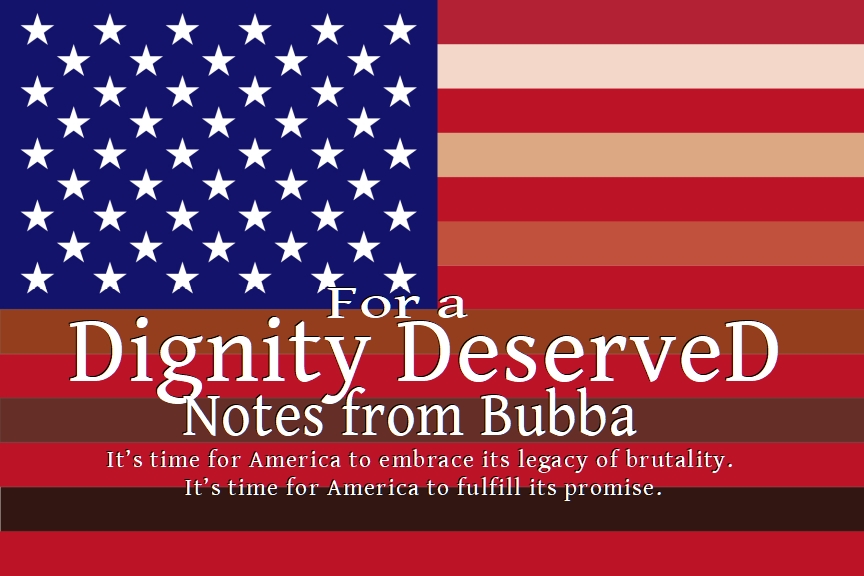

Many, many years ago, I shuffled my books under my desk and folded my hands atop my desk. I straightened my blue tie under the collar of my pale blue shirt with the school’s emblem stitched on the breast pocket. I sat in a classroom on the second floor, above the Catholic Church, where I attended mass every Sunday at 9:00 am with the rest of the St. Vincent Ferrer Grammar School students. Yes. I was raised Roman Catholic, and I understand today that not all Christians consider it a “true” Christian religion. In my Brooklyn-sheltered life, I believed it to be the one true religion. My mother (never my father), priests, and the nuns had repeated it many times, which made it true.
I was ten, an age when anyone a foot or more taller had all the answers. When I reached six feet, my fallacy came full front. Nobody listened to me even though I had all the answers. Now I’m decades older and shrinking slowly, and nobody listens to me even though I have all the answers. Yes, my life is frustrating. I comfort myself with Matthew’s warning: A prophet is not without honor except in his own town. (Oh, how I wax arrogantly.)
Irony, though, shrouds my comfort. I no longer consider myself a Christian or believer in any kind of almighty. My fall from grace came to the terminal frustration for my ever-devout mother. She once compared herself to St. Monica, mother of St. Augustine (I guess me). Oh, how she prayed for me over decades. She died, and I hope it wasn’t because of my apostatic ways. I digress.
Our teacher, usually a nun in a white and black habit and a rosary wrapped around her waist that dangled to her knees, asked (told) the class to stand. Our teachers intimidated us. They weren’t mean. Well, most weren’t. They ruled a classroom designed for 35 students that was packed with 70. Teacher’s aids were non-existent. They taught in isolation, a type of penance. Authoritarianism was the only solution; otherwise, chaos.
She blessed herself and faced the crucifix hanging under the clock in the front of the room. “Hail Mary, full of grace, the Lord is with thee…” We immediately synced with her. At ten, we had repeated the routine ten dozen times each school year, minimum. We knew the words. Periodically a competition developed: Who could say the prayer the fastest? The teacher stopped us and said, “You are talking to the mother of Jesus. Speak to her with solemnity.” Solemnity bolemnity. We knew nothing of the word except that we should slowly say the prayer with our heads bowed. We started from the top.
As soon as the word amen was spoken, our teacher turned to the right corner in the front of the classroom. There hung Old Glory, although we called it the flag. We would have thought Old Glory was the name bestowed on an old Mary. We placed our hands over our hearts and repeated almost in unison: I pledge allegiance to the flag of the United States of America and to the republic for which it stands, one nation under God, invisible, with liberty and justice for all.
We had no idea of the pledge’s history. Most assumed it was written about the same time as the Hail Mary. The pledge was written by the 19th Century minister Francis Bellamy. The original did not include the phrases “of the United States of America and to” and “under God.” The first and second phrases were redundant. What other flag would I pledge to, and why would I pledge to a flag? Weren’t we pledging allegiance to a nation? “Under God” was obvious. Why mention it? But most confusing of all was “invisible.” Of course, God was invisible. It would be years before we discovered that the correct word was indivisible. My question: Were we saying God was indivisible or the nation was indivisible? Grammatically, either is correct.
Individuals attending government functions repeat our childhood pledge routine. They place their right hands on their hearts and pledge their allegiance to an indivisible nation. The solemnity of the oath is muddled in mumbled words, spoken softly to a long memorized euphony, much as I did as a child. The crescendo comes when they say in a clear voice, “With liberty and justice for all.” It’s a powerful commitment, and it aligns with the professed theological beliefs inherent in the nation’s dominant religious and philosophical thinking.
When I hear with liberty and justice for all, I recall the final commandment Jesus gave his disciples: Love your neighbor as I have loved you. I again was young when I first comprehended the depth of the commandment. An anvil dropped on my sense of responsibility to family, friends, and others. How could I ever love someone as the Messiah had?
Decades later, the commandment still astounds me. Some 340 million people populate this country. I interact with one-millionth of them, give or take. Some I love, others I dislike, and most I truly barely know. How am I to love some 20-year-old from Mesa, Arizona? It’s assuredly a wonderful place, but I’ve never been. How can any human being fulfill such a commandment from a diety? Hubris says all, but realism says none. We are left with trying.
Even though I stopped believing in Jesus as God made man, I never forgot the notion of a benevolent God. My parents preached such a redeemer, the nuns did so in school, and our parish priests did so from the pulpit. The logic was simple. An almighty redeemed us, a misbegotten lot. Who but a benevolent entity would give with such magnificent generosity?
Generosity is love in action, as is charity. For this reason, the disciple Paul and great thinkers in all religions have trumpeted charity as the greatest virtue.
Charity signifies a reciprocal love between a person and God, made manifest by the individual’s unselfish love for his/her fellow human beings, according to Christian theology. The divinely infused habit of charity inclines an individual to cherish God for his sake above all things and humanity for the sake of God. Judaistic theology defines charity not as an extra but as the honest thing to do for fellow beings and is considered one of the pillars upon which the world rests. Islamic theology considers charity rooted in the belief that all human beings must collectively uplift and support one another. It is also seen as a means of self-purification and expressing gratitude to Allah. The theological and philosophical definitions of charity are similar for Buddhists, Hindus, Humanists, existentialists, and other atheists. Its universality is lost only on those who exploit their fellow human beings for power, greed, or psychological stupidity.
I’m at a loss. After researching the various theological teachings regarding charity, I presumed that believers envisioned a benevolent almighty. To my chagrin, that’s not the case. A study from the Institute of Studies of Religion at Baylor University found that only 25 percent of Americans believe in a benevolent almighty. Most do not, stripping charity of its virtuous status and uplifting the rule of indifference or cruelty. Hence, we as individuals and nations callously disregard the incarceration, torture, raping, maiming, and killing of those with whom we are interconnected. (My sarcastic side wonders if Jesus sits in heaven wondering if he wasted his time in Judea some two millennia ago.)
People are quirky. They frequently contradict what they say with what they do. That’s been my experience. I live in a small town, so small it doesn’t even have a traffic light. It’s about 10 miles to the nearest shopping area. It’s quiet and, by most Americans’ standards, boring. My wife calls it Mayberry by the Sea.
It’s a bit conservative with too many Donald Trump supporters, the kind who like images of the Rambo Trump. I, on the other hand, have held him in high disregard for four decades. He’s definitely not someone I would have invested with or allowed my sister to date (and I never interfered with her choice of dates). If he told me to turn left at a corner, I would have turned right. My endearment for blubber man puts me in a minority in this town. The majority have no problem with a felon sitting behind the Resolute Desk while I wait for it to spontaneously combust every time he signs an executive order.
My conservative neighbors made me nervous when I first arrived, to the point I wondered if we made a mistake moving here. I presumed they would be distant from the needs of others. I certainly misjudge them.
The community came to the assistance of a man who lived hermit-like. Community members set up a GoFundMe page for a family that lost its home to fire. They have a food pantry for those in need. They drive the desperate to shelters. They run a variety of counseling programs for people trying to beat their addictions. They help run a local theater company. They run monthly concerts during the summer and an annual festival with music, historical re-enactments, and display booths for local artists and merchants. They plant sea grass to retard erosion of the dunes along the shore. They created a multi-texture mural on the wall of the town’s museum, and only a few had artistic experience. They’ve pulled together a multi-million dollar flood prevention program and are working on a public water project to replace the household wells being infiltrated with salt water. And their town, small as it is, is run exclusively by volunteers, including the firefighters.
No one asks about an individual’s ethnicity, religion, or means. Those who can pitch in. Does everyone like each other? Of course not. Do people help those they don’t know? Definitely. Are there recognition awards for acts of charity? No. They do it because of proximity. They witness a neighbor’s suffering. They empathize and act. The town is not filled with saints. Most don’t even attend religious services, but they do recognize their interconnectedness and give, regardless if friend, foe, or stranger.
On this cornerstone of charity rests the testimony we pledge: With liberty and justice for all. There is no liberty for an individual suffering, whether physically or emotionally. The pain of existence squashes freedom.
Many years ago, I endured a life-saving operation that left me dependent on high dosages of painkillers administered by IV. My liberty vanished. Even with the medication, the pain was unbearable if I sat up, and standing was impossible without assistance. I was bedridden. Those inconveniences compared nothing to my loss of consciousness. I couldn’t follow conversations. My thoughts blurted out, confusing those around me. Frustration and anger filled in the gaps, but they were enough to prevent me from sinking deeper into despair. I had much to celebrate because the operation was more successful than my surgeon anticipated. It didn’t matter because I couldn’t connect to my wife or son, never mind other visitors. My life was gone. There was no liberty. Fortunately, my wife broke down crying after a visit. A nurse asked what was the matter. She explained. The nurse investigated the medications I was receiving. My reaction was one of the contraindications to the drug. The physician switched the painkiller, and my life returned. I wanted to move around regardless of the pain. My liberty was no longer lost. It was temporarily put on hold as I healed.
There is no liberty when misery overwhelms an individual. Remove the religious invocations regarding charity, and you return to one simple notion: A human being cloaked in misery has no liberty. Therefore, you give. You help that person restore his/her liberty. Kindness and generosity transform a community, state, nation, or the world into a better place.
That begs the questions. Why cut funding for USAID? Why fire or lay off thousands of federal workers without doing a cost-benefit analysis? Why deport thousands of individuals for violations of their green card status without evidence and without due process? Why fire lawyers who were doing as instructed by the Department of Justice? Why penalize law firms with associations with attorneys who worked on cases regarding the January 6 attempted corruption of the constitutionally mandated process? Why leave a man in a hell hole of a prison because of a federal government “administrative error,” and why encourage the dictator responsible for the hell hole to claim he had no power to return the illegally detained individual? (After all, the administration has suggested that the U.S. take over Greenland and the Panama Canal by force.)
Due process may be the most critical element of our once-effective judicial system. It’s deliberately being ignored to salve the ego of a man who believes that a physician examined his soul and that the blubber butt weighs less than 230 pounds. (I want his scale the next time I go for a visit to my physician.) An administration has one purpose for restricting due process: to weaken the judiciary. In one dissenting decision, Justice Sonia Sotomayor stated that the government is weakening due process so that, in the future, any citizen can be imprisoned for exercising a dissenting opinion about the administration and its actions.
Does any individual believe that the administration follows the precepts of any religious interpretation of charity? Does any individual believe that administration officials even remember the final six words of the pledge? Or do they say, “with liberty and justice for some”?
 For a Dignity Deserved