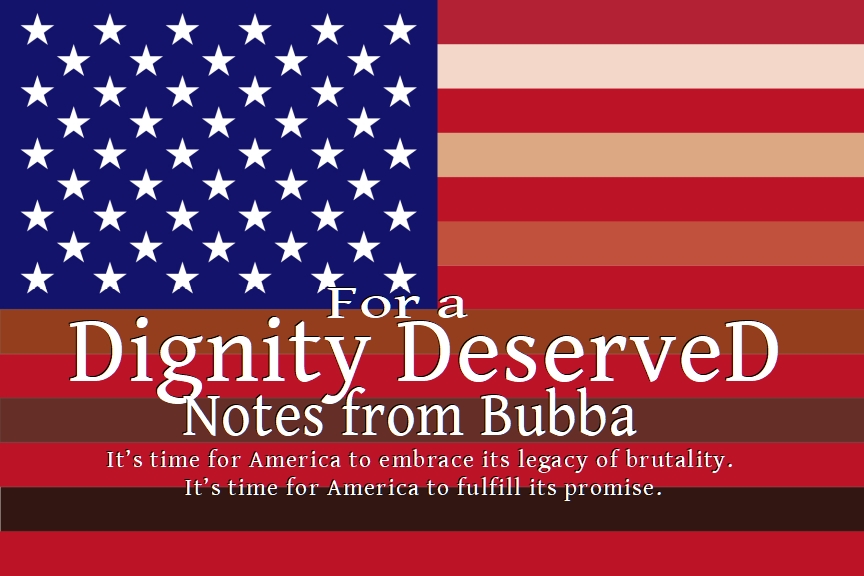
A new sadopopulism has dimmed American integrity. The sunlight of integrity faded about a decade ago when a political hopeful was caught on tape bragging that he grabbed women, and they liked it. There was a time when no political party would have endorsed such a candidate, but three times in less than a decade, the Republican Party has. Twice in that time, Americans elected him President. Under the umbrella of promises mixed with ethics compromised, Republicans proclaimed his 1.5-percent margin of victory in 2024 a mandate. Not only did they alter their perspective of integrity but also of grammar-school arithmetic.
This freakish turn triggered my memory of watching Donald Trump and his wife Milania glide down the escalator in Trump Tower. In the building’s lobby, he announced his run in the Republican 2016 Presidential primaries. He didn’t have a chance, I thought. He had attributes I assumed middle Americans would find repugnant: a billionaire New Yorker with a reputation for proclivities that contradicted their conservative Christianity. I was not alone, but I should have known better. I sat with him on “his” airplane for thirty minutes.
It was forty years ago. His section of the plane had seats facing each other, separated by a narrow table. He sat facing fore, I aft. Before I could ask about the new casino he was building in Atlantic City, he pointed to the golden seat belts wrapped around my lap. He boasted they were made of gold. I asked if it was 10 karats. No, he said, 18 karats.
For the first time, I was grateful I studied physics in college.
Gold is an excellent mineral with two valuable features. It resists corrosion and is pliable, making it an excellent metal for electronic products and jewelry, but it’s not the Superman of metals. It’s comparatively weak, not ideal for holding human bodies squarely in their seats when an airplane is decelerating or accelerating rapidly. The metal, especially 18 and 24 karat gold, is a metallurgical weakling. Mingling gold with other metals lowers the karat count and strengthens the metal. I gave him an out, but the Donald passed. Most likely, the buckles were plated gold, so I ignored his exaggeration or what he would have called “truthful hyperbole.”
He coined the phrase in his book The Art of the Deal (1987): “I play to people’s fantasies… People want to believe that something is the biggest and the greatest and the most spectacular. I call it truthful hyperbole. It’s an innocent form of exaggeration.” It’s a rhetorical bait and switch: Promise the greatest and deliver what you’ve got.
As if he were an editor with the Merriam-Webster Dictionary, he redefined truthful, hyperbole, and innocent. A hyperbole, by definition, is an exaggeration not intended to be taken literally, as in crying an ocean of tears. Never did a person fill an ocean with tears. The phrase is a rhetorical tool that strips truth from the phrase to make a point unrelated to the metaphor. Essentially, hyperbole borrows a fantasy to make a point distinct from the fantasy but has shortfalls.
Americans overuse it to be heard above the din, not to make an elusive truth. The cavalier employment cheapens a technique already on shaky grounds with its reliance on exaggeration and fantasy, opening it to exploitation. He has used the technique to describe the crisis surrounding illegal immigration. He claims the world is unleashing its most vicious criminals, and they head for the American border. He preys on the fantasies of people who have never shook an immigrant’s hand, talked with him or her, or shared a meal. These are the everyday human interactions that bring people closer. Without them, a void of ignorance gives the pretender a vast space to exploit fantasies imagined.
In October 2024, he did precisely that on the Hugh Hewitt Show. “Many of them murdered far more than one person, and they’re now happily living in the United States,” Mr. Trump told Mr. Hewitt, a conservative radio talk show host. “You know, now, a murderer, I believe this, it’s in their genes. And we got a lot of bad genes in our country right now,” reported the New York Times.
He takes a piece of biology, twists it, and gives credit to a disproven concept of good and bad genes. His choice of words pins a genetic concept to the theological morality of good and evil. Frequently, people with good genes are of European descent, and those with bad genes are people of color. He incorporates the disapproved theory of eugenics to determine good from bad. It salves the feelings of people with poor self-esteem: I’m white, I have good genes, so I deserve success. They are left with one question: Who stole my success?
Picky, picky, picky, you may say. That would be true if I had written that about most people. Trump isn’t most people. He loves exaggeration and fantasy. They are his playground. According to the Washington Post, he made more than 30,000 false or misleading claims during his first term as President. That’s an average of 21 per day. His classic described the January 6, 2020, riot, attack, or insurrection in the Capital as a peaceful gathering. Such claims aren’t mistakes. They reflect a style of dealing with people, of playing to the fantasies. So, if you need to believe the gathering at the Capital that January day was peaceful, then his truthful hyperbole reassures you, bringing you into his fantasy camp.
A fantasy, though, is an imagined reality, or to put it another way, an untruth. In the case of the seat belt buckles, he used an untruth to appeal to an untruth. He thought he was playing to my fantasies and wanted to impress me because he was promoting his third Atlantic City casino, the Taj Mahal, which was under construction. He bragged about the glitter and wonders of the hotel. He buried the more important story. His real estate empire was under financial stress, so much so that the casino filed for bankruptcy shortly after it opened. The bedrock of the Trump Empire was shaking, and soon after, his other two Atlantic City casinos filed for bankruptcy along with three other real estate properties. Mainstream lenders ceased to back new Trump projects. You might say lenders were tired of the hyperbole.
He masterly landed on his feet. He found the fantasies of other investors and began to market the Trump name, slapping it on buildings, hotels, steaks, men’s clothing, and the bible, charging a fee for his brand for millions, thousands, hundreds, or tens of dollars. Individuals craving to share in his glow purchased Trump products. He starred on the TV show The Apprentice, wielding the ax of power once a week with the line, “You’re fired.” He said it with confidence, and the television audience lapped up the spectacle, cheering the lion attacking the Christians.
During those few minutes, Trump lured his audience with melodramatic machinations of power, wealth, and prestige. I saw a bully getting off on his power over an individual, but I wasn’t his audience entranced by his spiel and the perception of power. What magnetically draws people to success and power? The closest I’ve ever come is a phenomenon, usually religious in nature. There are people who ingest scrapings from frescoes or religious amulets, believing they are merging the mortal and supernatural. Jeremie Koering calls them iconophages in his book Iconophages: A History of Ingesting Images. “If seeing is believing, then touching was receiving, and grinding up and drinking holy thing the ultimate assimilation,” writes Alexander Bevilacqua in his book review. It sounds strange, but it’s similar to Catholics ingesting the Eucharist. People also seek autographs, push and shove to get closer to a pop star, and get tongue-tied when they meet the famous.
Adoration brings them closer to what they consider divine or as close as possible to divinity in this life. Trump believers want to snuggle next to him. Or maybe it’s to worship him, hoping whatever has made him powerful will rub off on them. Wealthy fans spend thousands to stay at his Mar-a-Lago resort in Florida and donate millions to his inauguration. People of lesser means attend his rallies and buy Trump T-shirts, sneakers, gold coins, watches, and NFTs. In each case, their expenditures are like the lighted candles at altars to gods unknown. Each group seeks to be closer to him, touch him, and proclaim their adoration. Such devotion for any human is unfounded.
We beings are strange. We want a hero, a protector, and an individual guaranteeing a better life, especially the single-minded individual who by will, wit, and the ability to sustain mortal injuries, destroys an evil illusive to the powers that be. It’s a fantasy that explains why audiences flock to superhero movies. Put another way: We seek a second Messiah, as blasphemous as that sounds, even though by definition in the Judeo-Christian tradition, that can never be.
It’s a fantasy, and when we succumb to it, we surrender our free will, ability, and willingness to forge our own lives for better or worse. I wonder if I’m in a minority. There are people who wave the white flag to fate or God’s will. Fate doesn’t exist, and God did not strip humans of free will, for without it, there cannot be love. For example, a religious cult leader once convinced his followers to eat his ground-up toenail clippings. You may say that’s extreme, but how many people send money, which they cannot afford to send, to already wealthy preachers who claim they need new whatevers to do God’s work? These practices are easily mocked. You assume you would never succumb to such blatant manipulation. That may be so, but it still underestimates the allure. It’s a fantastical opiate. You start with a small dose. It makes you feel good. Then you have another, then another, then another because you enjoy the feeling. Then you’re hooked. Once you jump into a fantasy, possibilities expand beyond “normal” comprehension, and you buy an ugly pair of gold-colored sneakers. This toying with fantasies of people is precisely what is happening in American politics.
This ability is a part of Donald Trump’s marketing genius. He convinces people to lend him money or buy his products, promising them their fantastical world, more white, more Christian, more heterosexual, more of what they are than what other people are like. They believe him like the followers of those religious leaders. Why? Because he’s Donald Trump. He’s rich and powerful. He would never steer them wrong. And he drove to the White House in 2016 and 2024 following this map. He swayed millions, and they believed in his fantastical ideas.
Giving myself a moment of thought, I wonder if it’s a fan’s fentanyl. From its cores arises a monster born from the conflict between fantasy and reality, the imagined and the attainable, the cause and the effect, and eventually life and death, especially of the self.
Politicians aren’t addictive, as a rule. They are salespeople, selling promises. The ethical persuade voters that their ideas and hard work will improve their lives. Some promise the attainable, if not politically, at least in reality, but there are those who play to the weaknesses of voters. For example, some Russians yearn for the return of their empire. They imagine a great nation respected and feared in Europe and Asia. Vladimir Putin tugs not so gently on that string. He has compared himself to Peter the Great, probably the most successful ruler of Russia, and Putin, like the 18th Century ruler, wants to shore up the empire. What did that mean? He wove the tale that Ukraine was Russian because its people spoke Russian. It’s a fantasy. Many Ukrainians do speak Russian. There’s a reason. When under Soviet rule, most of the countries behind the Iron Curtain had extensive classes in Russian. Putin used that logic to justify the invasion of Crimea and Ukraine a few years later. Hitler used the same logic to absorb Austria and the Sudetenland.
Each leader blew into dog whistles, issuing silent coded wording that appealed to those who wished for imagined empires of the past. Those whistles beckon to their self-esteem and sense of entitlement. In each case, the whistles aren’t heard by the thoughtful, for the tunes have no logical harmony or rhythm. Their whistles expand the powers of the ruling class. It’s classic manipulation: Find a weakness or fear of a community and offer them an alternative, even unrealistic one, such as bringing down the price of eggs.
A musical came out on Broadway in 1957 and then as a movie in 1962. It’s called The Music Man. Harold Hill comes to the small Midwestern town of River City. It was the turn of the 20th Century when marching bands were popular. Hill plans to “sell” the town on the need for a marching band, promising to get the instruments, uniforms, and provide instruction. At a cost, of course, but he must convince the town that there is a problem that a marching band will solve. The town’s men gather at a pool hall. He joins them, and opportunity appears. He rips into a song called “Ya Got Trouble.”
A pool table, don’t you understand?
Friend, either you’re closing your eyes to a situation you do not wish to acknowledge
Or you are not aware of the caliber of disaster
Indicated by the presence of a pool table in your community
Well, ya got trouble my friend
Right here I say, trouble right in River City…
But just as I say
It takes judgment, brains, and maturity to score
In a balkline game
I say that any boob can take
And shove a ball in a pocket.
And I call that sloth. …
He praises the game but twists his meaning by yanking on non-sequiturs, leaving the pool players and other townspeople listening to how pool destroys their children. He finishes with the lines: “Oh yes, we got trouble here, we got big big trouble!/With a T! / Gotta rhyme it with P/And that stands for Pool.” He does two things. He uses the plural first person we, implying that River City is his town too, even though he plans to leave as soon as he receives their money. He then equates pool with trouble. What’s the solution? A band, of course, which he convinces the town with the song “76 Trombones.”
Seventy-six trombones led the big parade
With a hundred and ten cornets close at hand.
They were followed by rows and rows of the finest virtuosos,
The cream of ev’ry famous band.
Seventy-six trombones caught the morning sun
With a hundred and ten cornets right behind.
There were more than a thousand reeds
Springing up like weeds
There were horns of ev’ry shape and kind…
When the song ends, he asks the townspeople to buy more than 1200 instruments and uniforms. River City has a population of only a few hundred.
He bypasses the porosity by creating a fantasy where he saves the children of River City from corruption. He’s the savior, and what parent doesn’t want to save their children. Money flows in as parents buy instruments and uniforms, which Hill promises are on order. In the real world and as Hill plans, The Music Man will skip town without buying a single instrument. It’s a musical, and audiences want a happy ending. Hill falls in love and delivers instruments and uniforms. Everyone is happy as Hill, the drum major, leads the band down Main Street—everyone playing in perfect harmony.
I offer two points. Never trust a “stranger” who supposedly understands your great fear. Never ever trust someone selling you a fantasy solution, whether it’s a music man or politician.
You may say that the musical exaggerates. Not so much. You have visited the small fishing town where I live. It’s quiet. Some may say dull, so dull it’s difficult to realize that at the end of the 19th Century, it was a tourist mecca for people from Philadelphia. They’d sail down on the steamship Frederica for a long weekend or week. They stayed in one of the many hotels and ate at the various restaurants. (The town’s stories tend to ignore joints catering to devilish pleasures.) By 1910, competition from Atlantic City and “the beaches” off the ocean was cutting into the town’s tourism trade. Along came two real estate promoters. They promised a lavish development that would infuse the town with tourists who again fill the other hotels and go to the restaurants. Before they could build such a luxurious site, they needed funding. They sold shares in their promised resort. They vanished. The resort never broke ground, and investors were stuck with a loss.
The centuries-old Music Man types prey on human weaknesses, usually involving fear, greed, and deserving. Think of Internet scams. The Music Men (and women) of the 21st Century send thousands of emails, hoping to land one or two vulnerable individuals to contribute to helping a Nigerian prince move his money to the U.S., send money to stop the closure of an app, and to give their Social Security money to resolve a conflict. They prey on what’s called victim mentality. I’m not about the fray. I, too, have succumbed to the tales of hucksters. Your Nana stopped me more than once, and requests for personal information, like a Social Security number, made me pause.
Flimflam victims see the world as unfair or have poor self-esteem. They tend to concentrate on the negative, cannot see the larger picture, or believe they are being treated unjustly. They compare themselves to others, are passive about the world, or misunderstand the actions of others. Victimization is a virus. It’s contagious, as it is comically played out in The Music Man. An infected community blames third parties for its predicaments, and the Harold Hills of the world smell the scent of victimization. The flimflam artist prowls nearby, and before the victim notices, he pounces.
These predators are roaming America, increasing in numbers, and they fan frustration. They seek to return to an America where their economic prospects promise a sustainable income. In other words, they want to make America great again.
Their plight has swelled over the past three decades. Preoccupied with providing for their families daily, they haven’t noticed that wealth has shifted from the 70 percent of Americans to the top 10 percent. In fact, the top three Americans have more wealth than 50 percent of Americans combined. That is 170 million. Politics is a slow process of compromise, so it’ll take time to ensure the wealthiest Americans pay their fair share of taxes. Most Americans are tired of waiting, politicians making promises, and watching their economic security vanish. They starve for solutions and will gobble up the easiest. It’s a banquet set for the flimflam artist.
The less ethical politicians have heard their frustration, leaving them to find America’s pool hall or scapegoat.[1] It wasn’t difficult. These contemporary music men (and women) pull two old and musty tricks from their carpetbags, racist tropes, and misleading information. It’s a quirky response. Inhumane. Irrational. Stupid. Immoral. None of these have stopped us. Remember the witches of Salem in 17th-Century Massachusetts, the Jews in Nazi Germany, the indigenous Americans throughout the Americas, and African Americans throughout the United States, all scapegoats for mass hysteria born of fear and greed.
[1] Scapegoat is a loose translation of the Hebrew term Azazel, a goat symbolically loaded with the sins of the community and, on Yom Kippur, was chased into the wilderness, where it would die. It religious symbolism vanished with its translation, and it became synonymous with assigning flaws of a community onto another person or community, thereby giving the dominant group to chase its “Azazel” out into the wilderness.
 For a Dignity Deserved